
COCU38B

Readings
Acts 1: 15-17, 21-26
Peter suggests that the disciples should find a replacement for Judas, so they select two candidates and draw lots, and Matthias is added as an apostle to join the other eleven.
Psalm 1
Those who love God’s instruction and refuse to join in the company and works of the wicked are truly happy and bear fruit, while the wicked are ultimately destroyed.
1 John 5: 9-13
God has testified about Jesus that life is in him, and whoever has God’s Son has life eternal, so if we believe God’s testimony, we have this life.
John 17: 6-19
Jesus prays for his followers, the ones to whom he has revealed God’s name and God’s word which is truth. He prays that God would keep them safe, would make them one as he and the Father are one, and would make them holy in the truth.
(Bible readings summary by John van de Laar, Sacredise)
Continue reading

Posted in COCU Year B, Year B | 1 Comment

International Day for Biological Diversity, 22 May

2021 theme: “We’re part of the solution #ForNature”

The United Nations has proclaimed May 22 The International Day for Biological Diversity (IDB) to increase understanding and awareness of biodiversity issues, and to increase understanding of the importance of conservation and sustainable use.

Brigidine Sisters reflections here.

Suitable prayers and resources may also be found on this website on Season of Creation and World Environment Day (June 5).

Posted in Uncategorized | Comments Off on International Day for Biological Diversity, 22 May

National Infertility Awareness Week #NIAW

April 18-24 April 2021
(April 24-30, 2022; April 23-29, 2023; April 21-27, 2024; April 20-26, 2025)

Infertility affects 1 in 6 people of reproductive age, which can be a real struggle for many families longing to begin their journey of having a family. There are many in our churches and community on the long road they hope leads to parenthood via IVF, adoption etc.

You might consider hosting a service, or including this in prayers. Preparing this I must confess I felt disappointed at some of the prayers on offer – condescending, patronising, dismissive, and even the ‘magic’ fertility prayers that offer a miracle. Prayers offered to people living with infertility need to show compassion, solidarity, lament. I’ll keep looking for prayers…

Lord, hear my prayer this day:
Wind in the Wilderness, guide us through
the tangled brush and the darkened paths.
May we feel You when we are lonely;
may we know Your presence when we are afraid.
Guide us across the great barriers,
through the deep valleys, and
over the mountains of difficulty.
Wind in the Wilderness, may we feel You
when we need strength and courage.
Wind in the Wilderness, guide us safely through. Amen.
(Source: Rev. Mindi Welton-Mitchell)

Facebook: Of Womb and Tomb

Continue reading
Posted in Uncategorized | Comments Off on National Infertility Awareness Week #NIAW

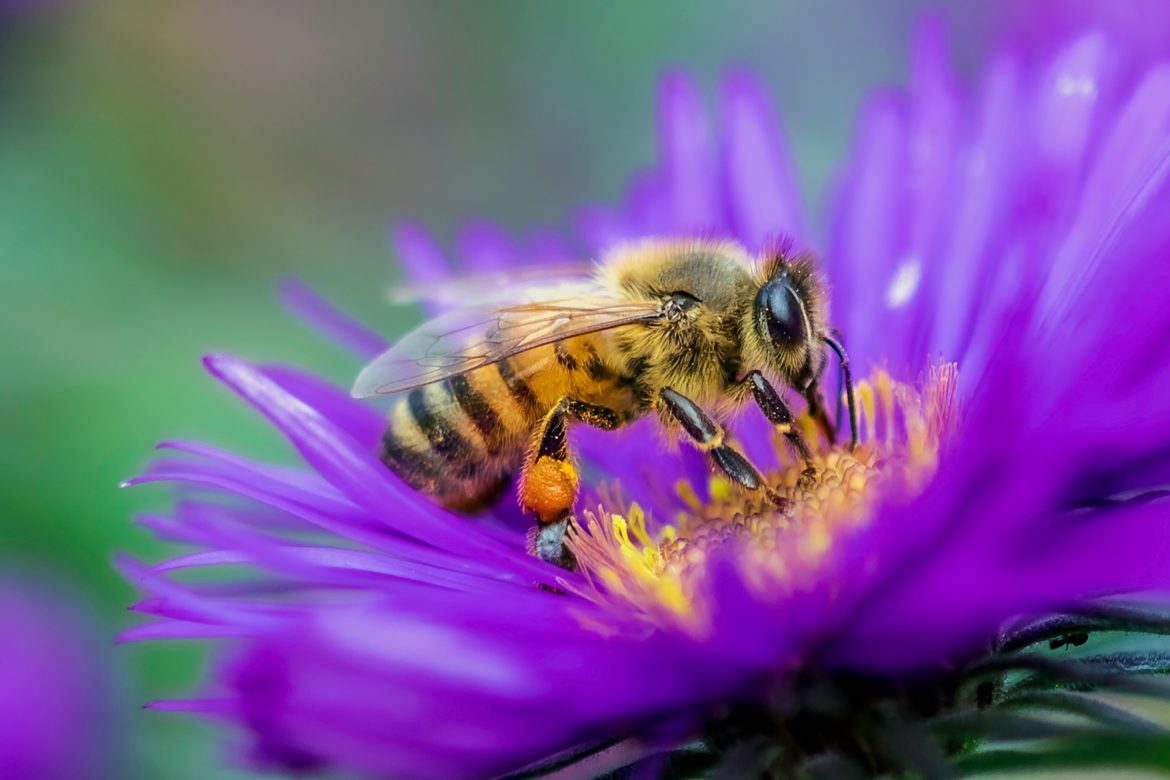
World Bee Day 20 May

photo by Dustin Humes, on Unsplash

St. Benedict is the patron of bee-keepers, and those who themselves have bees could not do better than mark his day by praying for their hives. In some parts of France it was, and may still be, customary for bee-keepers to have a medal of St. Benedict affixed to their hives.

Continue reading
Posted in Uncategorized | Comments Off on World Bee Day 20 May

Week of Prayer for Christian Unity

At least once a year, Christians are reminded of Jesus’ prayer for his disciples that “they may be one so that the world may believe” (see John 17.21). Hearts are touched and Christians come together to pray for their unity. Congregations and parishes all over the world exchange preachers or arrange special ecumenical celebrations and prayer services. The World Council of Churches commemoration of the Week of Prayer for Christian Unity traditionally runs from January 18 through to January 25 (northern hemisphere, between the feasts of St Peter and St Paul) and around Pentecost (southern hemisphere), which is also a symbolic date for unity. It is usually between the Day of Ascension and Day of Pentecost.

The 2026 dates are 17th-24th May (southern hemisphere).

The biblical text for 2026 is ‘There is one body and one Spirit, just as you were called to the one hope of your calling’. (Ephesians 4.4). The resource has been prepared by the Inter-Church Relations’ Department of the Armenian Apostolic Church.

The theme of the ecumenical worship service is ‘Light from light for light’.

Note: The Week of Prayer for Christian Unity resources are available in English, German, French, Spanish, Italian, Portuguese, and Arabic.

Continue reading
Posted in Week of Prayer for Christian Unity | Tagged , | 2 Comments

International Day of the Midwife (5May)

This is God’s Mothering Spirit: watching us, tending us, keeping us safe, never leaving our side, whispering words of comfort and strength and hope that this, too, shall pass.

“Yet it was you who took me from the womb;
you kept me safe on my mother’s breast.
On you I was cast from my birth,
and since my mother bore me
you have been my God.”
(Ps 22:9-10)

“For you, O Lord, are my hope,
my trust, O Lord, from my youth.
Upon you I have leaned from my birth;
it was you who took me from my mother’s womb.
My praise is continually of you.”
(Ps 71: 5-6)

How beautiful to think of the midwives and doctors and nurses and doulas who attend to women and babies at birth as being God-like in their work.

And what a tender image of God as the wise and strong and loving woman who catches each of us upon our birth and places us into our parents’ arms.

(Source: Laura Kelly Fanucci)

Two of the most powerful Jewish leaders in Jewish history, both extremely faithful and righteous women, were the first recorded midwives, Shifra and Puah.

They practiced their trade during a time where the very existence of the Jewish people was hanging by a delicate thread. Pharaoh’s astrologers had predicted that a Jewish male would rise amongst the Hebrews and overtake his throne. In a paranoid attempt to curtail the Jewish birth rate, he ordered all Jewish men into backbreaking slave labor (Ibn Ezra). But when the Jews continued to multiply, Pharaoh, driven by evil and desperation, commanded Shifra and Puah to kill all newborn Jewish boys.

“The midwives, however, feared G‑d; so they did not do as the king of Egypt had spoken to them, but they enabled the boys to live.” (Exodus 1:17)

Pharaoh didn’t count on the midwives’ defiance or their faith in G‑d. Despite the danger of defying Pharaoh’s command, Shifra and Puah decided to continue their holy calling. With whole-hearted faith in the Creator, they swam against a very strong and dangerous political tide, fully knowing that disobedience of Pharaoh’s decree meant death for them. But their fear of G‑d far surpassed their fear of a human king.

They helped to nurture and sustain all the newborn babies
From then on, not only did Shifra and Puah help birth the Jewish women, but they helped to nurture and sustain all the newborn babies. Before each birth, they prayed to G‑d to assist the Jewish women to birth quickly and safely, and they prayed for the health and well-being of all the babies under their care. The Midrash states that Shifra and Puah actually became G‑d’s partners in creation, granting life to the Jewish children ( Shemot Rabba 1:19).

“G‑d bestowed goodness upon the midwives, and the people multiplied and became very strong. It was because the midwives feared God that He made houses for them.” (Exodus 1:20-21)

The “houses” G‑d made for Shifra and Puah were, in fact, dynasties born through them. Our sages explain that Shifra was a pseudonym for Jochebed, and Puah was another name for Miriam. The name “Shifra” comes from the Hebrew word meshaperet, which means “to beautify” and/or “to swaddle and clean” (i.e., a baby). Miriam was called Puah, from the Hebrew verb “Po’ah,” which means “cry, coo or groan” because of the way she soothed and cooed the crying newborn infants.

Jochebed was blessed to give birth not only to her daughter, Miriam, but also to Moses and Aaron. Through Jochebed (Shifra), a nation of priests was born. And Miriam (Puah) was blessed to mother the Royal dynasty, the “House of David.”

There is something about being present at a birth . . . about standing at the threshold between born and unborn that transforms a person. Perhaps it is because of their trade that Shifra and Puah developed such faith in their conviction. Perhaps it was because they witnessed the miracle of life unfold before their eyes that they found the strength to face the challenge to kill or be killed—and overcome it with power and grace.

Shifra and Puah never entertained the idea of fighting G‑d’s will. Instead, they fought for G‑d’s will. And they won. This strength has been handed down all the way from our ancestral midwives to the modern midwives of today. May G‑d bless them to continue in the paths of Shifra and Puah—fearing G‑d, not man—and through their faith in the G‑dliness of birth bless them to be God’s partners in creation.
(Source: Sarah Zadok)

Consider for a moment the courage required for such action. Consider the depth of faith necessary to move one to such defiance. The midwives’ trust and confidence in the Almighty is such that nothing else matters and scripture tells us they are rewarded.
How are you called to be a compassionate partner in the birth of new life?
Where in your life are you called to be courageous for the sake of justice?
How might you better accompany those who, like the Israelites, are oppressed?

Some facts
It is approximated that for every 100,000 births in Asia and the Pacific 150 women die from complications related to pregnancy which can be prevented if proper investment in midwives is prioritised.

Stark disparities exist within the region — for every 100,000 births 220 women die in South Asia and 150 in South-East Asia, compared to 37 in East Asia.

While midwives could provide up to 90% of essential sexual, reproductive, maternal, newborn, and adolescent health care across the lifespan, there is a need-based shortage of 900,000 midwives globally.

Midwives are fundamental in ending preventable deaths during and after childbirth and achieving Sustainable Development Goal (SDG) 3.1 – which aims to reduce global deaths due to complications from pregnacy and childbirths ratio to less than 70 per 100,000 live births by 2030.

This year’s IDM theme: “Follow the data: Invest in Midwives”, will concide with the launch of the State of the World’s Midwifery (SoWMy) Report 2021 co-led by United Nations Funds on Populations (UNFPA), World Health Organization (WHO), and International Confederation of Midwives (ICM).

According to a recent study by UNFPA, WHO, and ICM, investing in midwives is a cost-effective way of improving health outcomes.

Modest increase of 10% in midwife-delivered interventions every five years could save 22% maternal deaths, 23% newborn deaths and 14% stillbirths and save 1.3 million lives per year by 2035.

Likewise, increasing coverage of midwife-delivered interventions by 25% every five years could avert 2.2 million deaths per year while universal (95%) coverage could save up to 4.3 million deaths per year.

With a global shortage of 900,000 midwives and the world facing the continued challenges of a global pandemic, midwives remain critical. Covid-19 has dramatically affected all aspects of health systems, notably in relation to maternal, sexual and reproductive, and adolescent healthcare. Disruption to service provision in these areas has increased the risks relating to health outcomes, as well as increasing unplanned pregnancies, sexually transmitted infections, unsafe terminations and increased health risks for mothers, newborns and adolescents.

Midwives can deliver care for women, children and adolescents outside of health facilities in the communities where they live, which is particularly important amid the pandemic as it has alleviated pressure on medical services. Further to this, home births protect women and families from exposure to Covid-19 inside health facilities. Critical to the Covid response in healthcare facilities, we must refrain from deploying midwives from midwifery to nursing services to provide care to general patients with Covid-19 as this takes them away from their essential role working in partnership with women and further contributes to the global midwifery shortage.

Gender transformative policies are needed to challenge the underlying causes of gender inequality, with consistent global leadership required to end gender discrimination within the health sector. Comprehensive international research and SoWMy 2021 show that women comprise more than 70 per cent of the health workforce. Gender inequality affects the status of midwives, most of whom are women (93 per cent globally), as well as their recruitment, mobility, career development, pay rates and self-care.

This is evidenced by a lack of investment in training and the professionalisation of midwifery practice. Investing in midwives has the power to accelerate the human rights agenda. In fact, this investment would be one of the most cost-effective strategies – to achieving full sexual and reproductive health coverage and reproductive freedom for women and all who give birth.
(Source: Carla Donson, manager of Women’s Network Whanganui, NZ)

Posted in Uncategorized | Comments Off on International Day of the Midwife (5May)

International Nurses Day – 12th May each year


International Nurses Day (IND) is an international day observed around the world on 12 May (the anniversary of Florence Nightingale’s birth) of each year, to mark the contributions that nurses make to society.

Posted in Uncategorized | Comments Off on International Nurses Day – 12th May each year

COCU36B

Readings
Acts 10: 44-48
As Peter preaches to the Gentile believers in Cornelius’ house, the Holy Spirit comes on them and they begin to speak with other tongues. Peter then baptises them confirming that God’s salvation is for the Gentiles as well as for the Jews.
Psalm 98
An exhortation to all creation to praise God for the wonderful works God has done, revealing God’s righteousness to all nations and bringing God’s justice into the world among all people.
1 John 5:1-6
When we love God and keep God’s commandments, we love God’s children. It is by this love that we know that we are born of God, and it is this faith that overcomes the world.
John 15:9-17
Jesus calls his followers to love one another just as he has loved them. There is no greater than to lay down one’s life, as Jesus does, for one’s friends. Through this obedience to Jesus’ command to love we bear fruit that lasts.
(Summaries of Bible readings by John van de Laar, Sacredise)

COCU36B.Easter6B.Readings handout 2018
Continue reading

Posted in COCU Year B | 1 Comment

Pluralism Sunday.first Sunday in May

The first Sunday of May is the day that many progressive Christian congregations observe as Pluralism Sunday, an initiative of Progressive Christianity.
Progressive Christians are Christians who affirm that the teachings of Jesus provide but one of many ways to experience the Sacredness and Oneness of life, and that we can draw from diverse sources of wisdom in our spiritual journey. (from The 8 Points of Progressive Christianity)
This varies from congregation to congregation. Some create interfaith worship services and invite participants from other traditions. Some have discussion forums on a variety of topics related to our multi-religious milieu.
“Pluralism isn’t just diversity; it’s something we create out of this diversity”
(Dr. Diana Eck, founder and director of the Pluralism Project)
“There’s a lot of confusion out there about “pluralism.” It’s often confused with “relativism,” but the two ideas are quite different. It’s not that everything is equal and that we can’t make value judgments. Perhaps there are aspects of some religions that should be universally condemned. Take, for example, religiously sanctioned genital mutilation of women – this isn’t okay; and it would be well within the obligations of other religions to speak out against this practice. So, it’s not like pluralism means ‘anything goes.’ At the same time, it is recognition that no religion has an ultimate or final claim to The Truth.” (Jim Burklo, Coordinator of Pluralism Sunday)

Continue reading
Posted in Uncategorized | Comments Off on Pluralism Sunday.first Sunday in May

COCU35B

Readings:
Acts 8: 26-40: Philip is instructed to go to a certain road where he encounters an Ethiopian eunuch on his way home after worshipping in Jerusalem. Philip finds him reading Isaiah’s scroll, and explains what the Scriptures say about Jesus. Then he baptises the eunuch
Psalm 22: 25-31: A psalm of praise and commitment in which God is celebrated for God’s provision and authority, and all people are challenged to worship God, to fulfil promises to God, and to proclaim God’s righteousness to unborn generations.
1 John 4: 7-21: An exhortation to love one another, because God is love. If we cannot love our brothers and sisters whom we have seen, we cannot love God whom we do not see, but, as God has loved us, inspiring love for God in our hearts, so too, we should love one another. Such love drives out fear.
John 15:1-8: Jesus is the vine and we are the branches. God desires us to bear fruit, and to do so we must remain in Christ.
(Summaries of Bible readings by John van de Laar, Sacredise)

Readings handout:
COCU35B.Easter5B.3May2015
COCU35B.Easter5B.Readings 2018

Continue reading

Posted in COCU Year B | 1 Comment