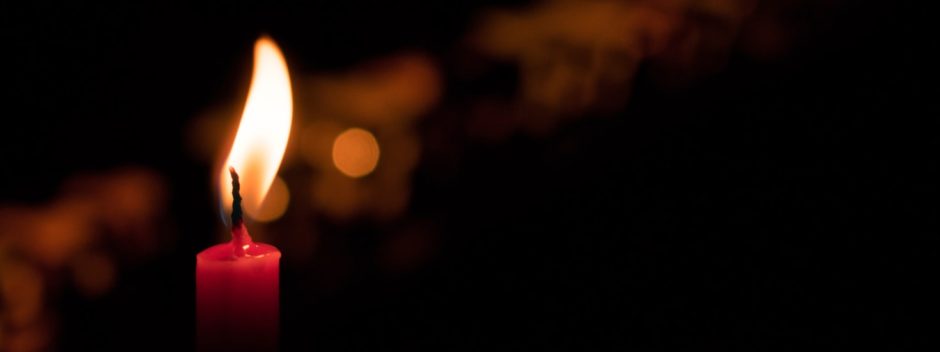
IDOP is recognised on the first Sunday in November each year, dedicated to the saints and martyrs of the Christian faith, and for persecuted and displaced people around the world. IDOP website here. It is also the closest Sunday to All Saints Day.
As we gather in prayer, we are reminded that different ideologies, rising religious fanaticism, oppressive governments, and the horrors of war are putting more and more pressure on Christians and the Church. We have also seen a troubling increase in the failure of Christian organisations dedicated to supporting persecuted believers, putting the future of these individuals in jeopardy.
The sad reality is that religious persecution, ethnic conflicts, economic crisis, and political instability have forced millions of Christians to leave their homes. Those who are displaced often live as hated minorities in hostile communities. They not only suffer persecution but also face constant discrimination that keeps them trapped in poverty. Without access to education and decent jobs, they struggle to provide for their families and often go hungry.
Many of these brothers and sisters continue to suffer in refugee camps, where religiously motivated violence is often ignored by the government, authorities, the media, and the public. Because of this, governments and even aid organisations sometimes unintentionally contribute to the discrimination against displaced Christians.
As we observe IDOP this year, let us fervently pray for these persecuted believers. May our prayers bring them strength and hope, and may our voices rise in unity to advocate for justice on their behalf, until the day we witness Jesus in His full glory.
God, you know The plight of people far away Oppressed by governments and vigilantes In places Where Christianity is an unpopular choice. God, you knew That the day would come here When truth-telling would be despised And siding with the oppressed Part of the road less travelled. Have mercy, O God, Upon persecuted Christians there and here Who are willing to suffer consequences For speaking your Name In word or in deed In defiance or in advocacy. Grant courage and strength To all who would dare To live their convictions out loud. Amen. (UMC Discipleship)
Christ is our peace. He has reconciled us to God in one body by the cross. We meet in his name and share his peace. The peace of the Lord be always with you. And also with you. We offer each other a sign of peace.
Posted inUncategorized|Comments Off on Words to introduce Passing of the Peace
Readings Deuteronomy 34:1-12: Moses climbs Mount Nebo and views the whole of the promised land. Then he dies, but no one knows where his grave is. After the thirty day mourning period, Joshua takes over as leader of the Israelites. OR Leviticus 19:1-2, 15-18: God commands Moses to tell the people to be holy as God is holy. Commands are then given that they must deal justly and fairly with one another, and must love their neighbours as they love themselves. Psalm 90:1-6, 13-17: A prayer accredited to Moses, praising God for God’s greatness, God’s help for God’s people and God’s calling of the people to turn back to God. Also a plea for God’s kindness to be with God’s people and for God to sustain their work. OR Psalm 1: A song in celebration of the righteous whose lives are built on God’s commands, and who, unlike the wicked, bear fruit and prosper. 1 Thessalonians 2:1-8: A description of the faithful ministry of the apostles among the Thessalonians, in spite of persecution – a ministry approved by God, free from impure motives or boasting, not seeking special treatment, but caring and gentle. Matthew 22:34-46: Jesus is asked what the greatest commandment is, and he replies that it is to love God with everything and to love our neighbours as ourselves. Then he asks whose son the Messiah is. When the religious leaders reply that he is David’s son, Jesus asks why David refers to the Messiah as “Lord” – and no one is able to give an answer. (Bible summaries by John van de Laar, Sacredise)
Readings Exodus 33:12-23: Moses pleads with God for God’s presence to go with the Israelites, which is what will distinguish them from other nations, and God promises to do so. Then Moses asks to see God’s glory and God agrees to pass by Moses, speaking God’s name, while hiding Moses in a cleft in the rock, and then to then allow Moses to see God’s back, but not God’s face. OR Isaiah 45:1-7: A prophecy about Cyrus and how God has prepared his way and given him power and position for the sake of God’s people, though he does not know God, and God has strengthened him so that the whole world will know that God is God. Psalm 99: A call to honour and worship God, because God is holy and mighty, and has answered Moses, Aaron and Samuel when they prayed, and has shown that God is forgiving and just. OR Psalm 96:1-9 (10-13): A call to sing to God and praise God’s name, because God is mighty, majestic and beautiful and God deserves to be worshipped, and God is coming to judge the earth justly with righteousness and truth. 1 Thessalonians 1:1-10: Paul expresses his joy and gratitude for the Thessalonian church, for their faith, hope and love, and for the way they have witnessed to Christ in their part of the world, spreading the word they received in the Holy Spirit’s power, in spite of their suffering. Matthew 22:15-22: The religious leaders try to trap Jesus by asking him whether it is lawful to pay taxes to Caesar. Jesus responds by asking for a coin, and asking whose inscription is on it. When they reply that it is Caesar’s, Jesus tells them to give Caesar what is Caesar’s and to give God what is God’s. (Summary of Bible readings by John van de Laar, Sacredise)
Readings Exodus: 32:1-14: While Moses is on the mountain with God, the people, struggling with how long he has been gone, ask Aaron to make them gods. He agrees, takes their gold jewellery and makes a golden calf which the people then worship, even though he tries to remind them that their celebration is “to the Lord”. Psalm 106: 1-6, 19-23: A psalm of confession, remembering how God’s people turned away, and traded God for an image of a calf, forgetting God’s saving acts for them. Also, a recognition that God seemed intent on destroying the people, but for Moses pleading on their behalf. Philippians 4:1-9: Paul encourages the Church to stand firm, to agree with one another, to live as those who await Christ’s appearance, and to meditate on those things that are good, true and beautiful. Matthew 22:1-14: Jesus tells a story about a king who prepares a wedding feast for his son, but the none of the originally invited guests want to go. So, he sends his soldiers to destroy those guests, and then he invites others from the streets to come in, but when someone is found without wedding clothes, that person is thrown out. Jesus finishes with the well-known saying that many are invited but few are chosen. (Summaries by John van de Laar, Sacredise)
Readings Exodus 20:1-4, 7-9, 12-20: God speaks God’s commandments to the people of Israel who are terrified by the thunder, lightning, smoke and trumpet sounds. They ask Moses to speak to God on their behalf, because of their fear, but Moses reassures them that God is simply keeping the people in awe so they don’t sin. Psalm 19: A psalm celebrating creation which proclaims God’s glory, and God’s law which enlightens brings reward to those who keep it. Philippians 3:4b-14: Paul, who has good reason for confidence under the law because of his upbringing and observance, values only the righteousness which he has received through Christ, and through which he knows the power of Christ’s resurrection and participates in Christ’s sufferings. Matthew 21:33-46: Jesus tells a story about a farmer who cultivates a vineyard and then rents it to tenant farmers, who, instead of giving the farmer his share of the fruit when it’s due, kills his servants and then the farmer’s son. In this way, he explains, God’s reign is being given to those who will produce fruit. (Source: John van de Laar, Sacredise) Continue reading →
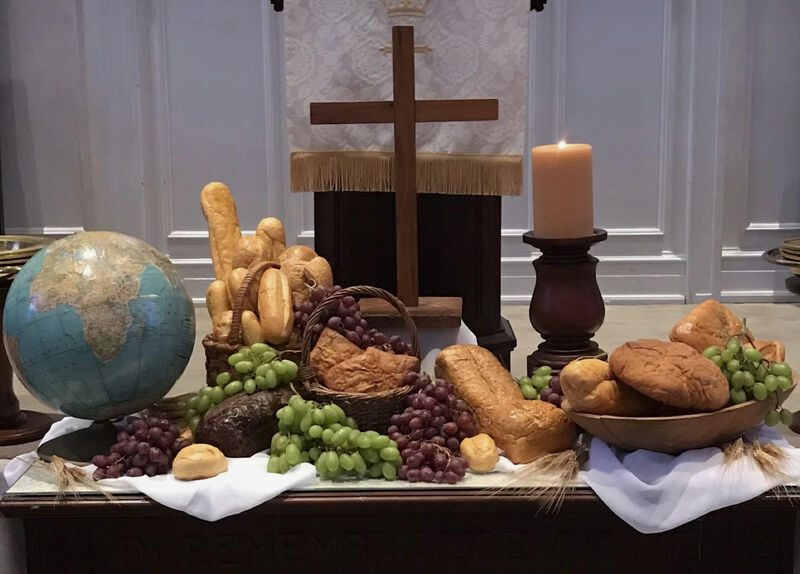
World Communion Sunday is a celebration observed by several Christian denominations, taking place on the first Sunday of every October, that promotes Christian unity and ecumenical cooperation.
“It’s gotten out of date,” someone said, this custom of mid-twentieth century. On the contrary, I reply, after listening to my country’s current leader slamming the entire United Nations, praising the destruction of the environment for the world’s grandchildren, boasting of incarcerating those who most need welcome and drowning boats in international water without boarding to check their cargo. Having Communion across national borders seems like the least we can do, hoping against all logic, that a weeping world would want to eat with us. (Source: (2025) Maren Tirabassi, Gifts in Open Hands)
This video from Uniting World (prepared for Lent 2022) has lovely images from churches in different countries and could be incorporated into a service. Continue reading →
Posted inSpecial days|Comments Off on World Communion Sunday – 1st Sunday in October
Readings Exodus 17:1-7: The Israelites complain that they have no water, and Moses takes their complaint to God. God instructs Moses to strike the rock at Horeb with his staff and water flows out for the people to drink. Psalm 78: 1-4, 12-16 A teaching psalm reminding God’s people of all that God has done, bringing God’s people out of Egypt, leading with a pillar of fire by night and cloud by day, and splitting open the rock to give them water to drink. Philippians 2: 1-13 The apostle encourages the Philippian Christians to be united and to be like Christ in their humility, service and self-sacrifice, quoting the ancient hymn of the Church. He reminds them that they are to live out their salvation, trusting God who gives them the will and the power to do it. Matthew 21: 23-32 The religious leaders question Jesus’ authority, but Jesus refuses to answer them because they can’t answer his question about John’s authority. Then he tells them a parable about two sons whose father asks them to work in the vineyard. One says no, but then does, and the other says yes, but doesn’t. Jesus explains that like this, religious people are missing out on the kingdom, while outcasts are finding their way in.
(Summary of Bible readings by John van de Laar, Sacredise)
Opening prayer/praise
We praise You, Lord God,
that Your Way is found
not by travelling an exclusive highway,
or in secrets preserved only for some,
but in the open field of love and grace,
where all who choose may come and play.
We praise You, Lord God,
that Your Truth is heard
not only in the words of scholars and authors,
or in brittle, inflexible ideas,
but in honest questions
and difficult conversations,
in the courageous attempts of simple people
to live lives of integrity.
We praise You, Lord God,
that Your Life is discovered
not just in the predictable places of beauty and wealth
or within the confines of clearly demarcated norms,
but in the unexpected generosity and pride
of those who have nothing,
in the creativity and risk
of trying new things,
and defending the vulnerable.
We open ourselves again to Your call,
determined to do what we promise,
to follow Your Way,
to embody Your Truth
to share Your Life.
And to do it all with thanksgiving and praise. Amen.
(Source, John van de Laar, Sacredise)
Call to worship
Here, in this place, we set apart time for worship,
and to encourage each other in Christ.
It is God who is at work in us,
enabling us both to will and to work for God’s good pleasure.
God, source of life, Jesus, firstborn of creation, Spirit, living breath in all that is:
we come to be thankful for life in all its fullness.
Let us worship God.
Gathering words
What patience to endure
the squabbles of your people;
what humility, to take
our doubts and disbelief.
What faithfulness you show,
through desert thirst and fear;
what miracles inspired by you,
the very, precious, gift of life.
What wisdom we hear from you,
if we will listen – we are here to listen.
(Source: Sarah Agnew, Pray the Story) Continue reading →
Readings Exodus 16:2-15
The Israelites complain that Moses has brought them out into the desert to die because they have no food. But God tells Moses to inform the people that God has heard their complaints and will send them food. Then, in the evening, quails fill the camp, and in the morning manna covers the ground. Psalm 105:1-6, 37-45
A celebration of God’s action on behalf of the Israelites, remembering God’s provision of manna and quail in the wilderness. Philippians 1:21-30
Paul reflects on how he is united with Christ whether he is alive or dead, but how he is convinced that he must remain in order to keep serving God’s people. Then he encourages them to continue to live in ways that reflect God’s reign, even when it results in suffering. Matthew 20:1-16
Jesus tells a story about an employer who hires workers throughout the day, but pays them all the same at the end. When those who started at the beginning of the day complain, he challenges them, asking whether they resent his generosity to others. This story leads Jesus into his famous words about the first being last and the last first.
(Summary of Bible readings by John van de Laar, Sacredise)
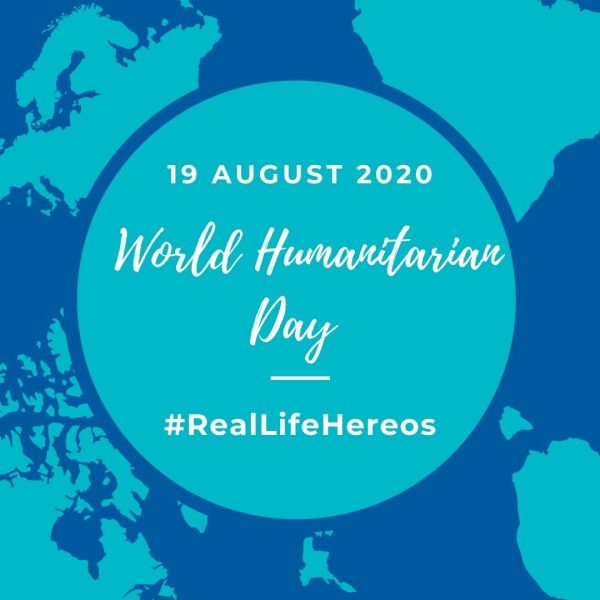
In 2008, the United Nations General Assembly designated 19 August as World Humanitarian Day to raise awareness about humanitarian assistance worldwide and to pay tribute to the people who risk their lives to provide it. World Humanitarian Day was commemorated for the first time on 19 August 2009. World Humanitarian Day falls on the day of the attack on the UN compound in Baghdad on 19 August 2003, which claimed the lives of 22 people including the Secretary-General’s Special Representative for Iraq, Sergio Vieira de Mello. Since then, nearly 5,000 humanitarians have been killed, wounded or abducted, and the 2010-2019 decade experienced a 117 per cent increase in attacks compared to 2000-2009. World Humanitarian Day honours all humanitarians – many working in their own communities – who are going to extraordinary lengths in extraordinary times to help women, men and children whose lives are upended by crises and the global COVID-19 pandemic. The dedication, perseverance and self-sacrifice of these real-life heroes represent the best of humanity as they respond to the COVID-19 crisis and the massive increase in humanitarian needs it has triggered. First responders are often people in need themselves – refugees, members of civil-society organizations and local health workers. They bring food, shelter, health care, protection and hope to others amid conflict, displacement, disaster and disease. But humanitarian workers are being tested like never before, struggling with unprecedented movement restrictions and insufficient resources as needs are outpacing funds. And all too often, they risk their own lives to save the lives of others. In recent weeks alone, despicable attacks have killed aid workers in Niger and Cameroon, and since the onset of the pandemic, scores of health workers have come under attack across the world. According to Humanitarian Outcomes’ Aid Worker Security Database, major attacks against humanitarians last year surpassed all previous years on record. A total of 483 relief workers were attacked, 125 killed, 234 wounded and 124 kidnapped in 277 separate incidents. This is an 18 per cent increase in the number of victims compared to 2018. A surge in attacks against health workers was recorded in 2019, including strikes against medics in Syria and shootings of Ebola workers in the Democratic Republic of the Congo (DRC). Most of the attacks occurred in Syria, followed by South Sudan, DRC, Afghanistan and the Central African Republic. Mali and Yemen both saw a doubling of major attacks from the previous year. The UN condemns these attacks, and it calls for accountability for perpetrators and justice for survivors. Relief workers cannot be a target. Mark Lowcock, the Under-Secretary-General for Humanitarian Affairs and Emergency Relief Coordinator, said: “To humanitarian workers everywhere doing important, courageous work on the front lines we say Thank You. You are saving lives every day, and as new challenges and crises are piling on to existing ones, your perseverance is an inspiration. Your protection is also paramount to making sure we can deliver to people most in need. The best way to pay tribute to humanitarian workers is by funding their work and ensuring their safety.” This year’s World Humanitarian Day comes as the world fights the COVID-19 pandemic. To pay tribute to the efforts of humanitarians, OCHA and its partners present the personal stories of some of the #RealLifeHeroes who are stepping up to meet the challenges, particularly local humanitarian workers. They include refugees who as health workers are playing essential roles in the pandemic response; Ebola health workers who are stepping in to fight COVID-19; and doctors and nurses who continue to provide critical health care to women and children. Read their inspiring stories here.
Quote: “Several times I have decided to leave El Salvador. I almost could, except for the children, the poor, the bruised victims of this insanity. Who would care for them? Whose hearts could be so staunch as to favor the reasonable thing in a sea of their tears and loneliness? Not mine, dear friend, not mine.” Jean Donovan (David Scott, “December’s Rose Blooms Despite the Cold,” Posted 2009) Jean Donovan (April 10, 1953 – December 2, 1980) was an American lay missionary who was raped and murdered with three nuns in El Salvador by a military death squad while volunteering to do charity work during that country’s civil war.
Quote: “When we struggle for human rights, for freedom, for dignity, when we feel that it is a ministry of the church to concern itself for those who are hungry, for those who have no schools, for those who are deprived, we are not departing from God’s promise.” Oscar Romero (The Violence of Love) Oscar Romero (August 15,1917 – March 24, 1980) was a priest of the Catholic Church in El Salvador and became the fourth Archbishop of San Salvador. He was assassinated while celebrating Mass at a small chapel located in a hospital. In 1997 Pope John Paul II bestowed upon him the title Servant of God.
Loving God, we ask a special blessing on those who answer the call to do your work in some of the most dangerous and violent situations. They risk their lives to give a voice to the vulnerable and to share compassionately in their suffering. Bless, protect, and strengthen all who serve in the struggle for human rights and let us be ever mindful to and stand in solidarity with their loving and steady examples. Amen. (Source: Catholic Health Association of the US)
Call to Payer Ecclesiastes 4:1 Again, I saw all the oppressions that are practiced under the sun. Look, the tears of the oppressed – with no one to comfort them! Reflection When I was a boy and I would see scary things in the news, my mother would say to me, “Look for the helpers. You will always find people who are helping.” To this day, especially in times of “disaster,” I remember my mother’s words and I am always comforted by realizing that there are still so many helpers – so many caring people in this world. – Fred Rogers Every day humanitarian aid workers help millions of people around the world, regardless of who they are and where they are. World Humanitarian Day pays tribute to the men and women who risk their lives in service to others and raises awareness and support for those affected by crises around the world. Scripture tells us there is no greater love than to lay down one’s life for a friend (John 15:13). Rejecting the myth of our disconnectedness, they offer their lives in service not for their friends but for strangers. Humanitarians make real God’s love for the world. Intercessions For the dawn of peace to dispel the night of war. We pray: Lord, hear the cry of the poor. May God protect and keep the tens of millions of refugees of conflict and those who are hostage to war in their countries. We pray: Lord, hear the cry of the poor. That decision makers consider it their top priority to enact policies that cherish and safeguard the dignity of all people. We pray: Lord, hear the cry of the poor. In gratitude for the helpers, may they be strengthened in their resolve, supported in their vocation and filled with the Spirit of God. We pray: Lord, hear the cry of the poor. For those who have died as victims of war, may they know God’s eternal peace. We pray: Lord, hear the cry of the poor. (Source: Catholic Health Association of the US)
World Humanitarian Day is an opportunity to celebrate the goodness of so many generous people. It reminds us also of the generosity of ordinary people and of the sacrifices they make to support others. It encourages us not to give up on the human race. We can also be encouraged by the diversity of the backgrounds and the motivation of people who put themselves out to help and support people who are in need. We are reminded of how much we have in common with colleagues with whose ideas we may disagree. We find ourselves humbled by their goodness. Many of us who attend rallies for refugees or concerts for sick children find ourselves surrounded by the banners of Christians from different churches, of Buddhists, Muslims, LGBT people, vegans, unionists, lawyers, humanists, and by so many people who march under no particular banner. We are united by a common dedication to humanity. We are constantly inspired to find that the diversity of our religious background and experience flows into a common passion to accompany people who are vulnerable and into gratitude for the community that we form. That is the highest tribute to the Christian tradition that we have inherited. Underlying World Humanitarian Day is the conviction that each human being is precious, not because of the groups they belong to, nor because of their race, gender, wealth, good deeds, intelligence and good fortune, but simply because they are human. Because we depend on one another for life and prosperity we recognise that we also have a responsibility for one another to look out for one another, and to ensure that all people are protected by the rule of law and have access to food, shelter, medical care, education and opportunity to contribute to society. (Source: Fr Andy Hamilton SJ)
Posted inUncategorized|Comments Off on World Humanitarian Day, August 19
This website stores cookies on your computer. These cookies are used to provide a more personalized experience and to track your whereabouts around our website in compliance with the European General Data Protection Regulation. If you decide to to opt-out of any future tracking, a cookie will be setup in your browser to remember this choice for one year.